


【2026 Latest】Winning in the US "Returns Superpower": Optimizing Reverse Logistics for Cross-Border E-Commerce
Hello, this is the PR team at AnyLogi.
As we head into 2026, the cross-border e-commerce market is experiencing unprecedented momentum. The US market, in particular, attracts many merchants due to its massive scale. However, almost every business expanding there inevitably hits the same wall: returns.
The US is a self-proclaimed "returns superpower." For American consumers, returning a product that doesn't quite match their expectations is a deeply ingrained cultural norm. Current data indicates that e-commerce return rates are hovering around 30%. How businesses handle these "incoming goods"—in other words, the success or failure of their reverse logistics—is the ultimate turning point between draining profits or protecting them.
In this article, we’ll discuss the latest trends and strategies for optimizing reverse logistics to help your business win in the competitive US market.
1. Why "Reverse Logistics" Matters More Than Ever
In the past, returns were often shrugged off as an unavoidable cost of doing business. However, in 2026, as logistics costs continue to soar, delayed returns processing and opaque procedures can fatally damage brand trust.
For cross-border e-commerce from Japan to the US, international shipping fees are exceptionally high. Simply asking customers to "ship it back to Japan" is a surefire way to lose money. What is required now is smart collection utilizing local hubs, combined with rapid decision-making regarding resale or disposal. Instead of viewing returns as a "liability," brands must adopt a strategic perspective that turns returns into next-sale opportunities and better customer experiences.
2. Transforming Return Policies to Boost Customer Loyalty
When US consumers are about to click the "Buy" button, the first thing they check is the return policy. While "Free Returns" is becoming the industry standard, simply making it free is no longer enough.
- Are the return steps clearly explained with visual guides?
- Is the timeline for refunds transparent?
- Is the exchange process seamless?
The clearer these points are, the lower the psychological barrier to purchase, which directly drives higher conversion rates (CVR). Providing customers with the peace of mind that "everything will be fine, just in case" is a powerful weapon against competitors.
3. Embracing Technology for "Digital Return Management"
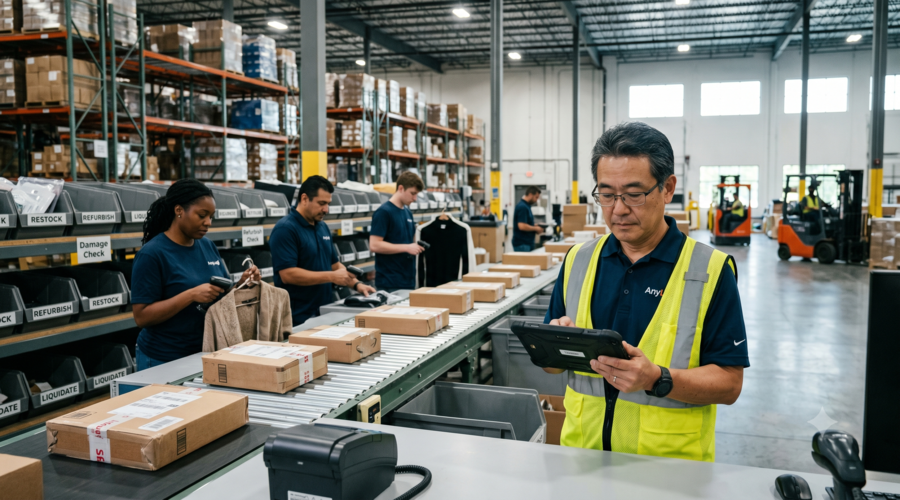
In 2026, leveraging technology in logistics is non-negotiable. For instance, systems that assign digital IDs to returned items—allowing inspection statuses to sync with the system the moment they arrive at a local warehouse—are becoming widespread.
If an item is deemed "like new and resalable," it is instantly synced back into the official online store's inventory. This minimizes the time products sit idle in the warehouse and prevents lost sales opportunities.
Furthermore, converting return reasons into data for analysis enables "proactive reverse logistics." This insight can be used to improve products, optimize descriptions, and stop returns before they even happen.
4. The Secret to Cost Reduction: Leveraging Local Networks
The ultimate secret to cutting down on return shipping costs to Japan is "centralized management within the US." Instead of shipping individual returns back to Japan one by one, aggregating them at a local logistics hub for bulk processing can drastically reduce shipping expenses.
It is also crucial to fully utilize local carrier networks to offer ultimate convenience, such as one-click home pickups. Providing a seamless experience—without forcing consumers to deal with complex commercial invoices or international shipping procedures—is the key to winning repeat customers.
5. Turning Returns into "Re-purchase Opportunities"
When a customer reaches out about a return, it is actually your biggest opportunity to build a loyal fan. While you cannot change the fact that the product wasn't the right fit, a sincere and speedy response will make the customer think, “This shop is highly trustworthy.”
Modern Customer Relationship Management (CRM) systems regularly use automated notifications to keep buyers at ease and recommend alternative products during the return process. Viewing reverse logistics not just as an operational task, but as an integral part of marketing, is the winning formula for cross-border e-commerce in 2026.
Leave It to AnyLogi
AnyLogi is a comprehensive logistics platform that supports both domestic and international supply chains. We seamlessly power your logistics by integrating with various e-commerce carts and marketplaces, including Shopify. Additionally, by fully leveraging the global network of AnyMind Group—which operates 24 offices across 15 countries and regions, primarily in Asia—we provide forwarding services directly linked to local delivery networks, as well as centralized import/export and return management services.
By automating everything from individual return collections to local inspections and re-stocking in a one-stop workflow, we drastically streamline the reverse logistics process for US-bound cross-border e-commerce. We eliminate wasteful international return shipping costs and enable resale synchronization in as little as 24 hours from the moment an item arrives at our local warehouse.
We can provide a quote as early as the same day. Please feel free to reach out to us using the inquiry form below!

![[By Marketplace] Master the Requirements for Rakuten Saikyo Delivery & Amazon FBA! Domestic Mall Delivery Quality Manual](https://images.ctfassets.net/buewhk0kqxwv/6nnIJ7hAVYfUuWOr6zmElQ/f230e7d62a7e9d02105f8d1491bc656b/Gemini_Generated_Image_6od3cg6od3cg6od3__1_.jpeg)