



An Introduction to Cross-Border E-Commerce Logistics Costs: Avoid Surprises! 3 Hidden Risks & Latest 2026 Solutions
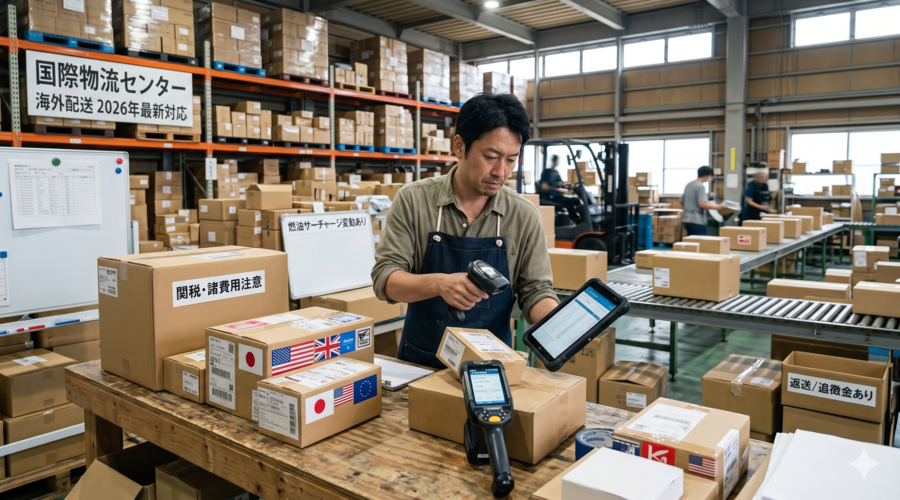
When expanding into cross-border e-commerce, "unexpected expenses" are one of the biggest headaches for many merchants. Have you ever calculated your costs based solely on the shipping rates displayed on your screen, only to be shocked by the final invoice later?
Hello, this is the PR team at AnyLogi. Today, we will unveil the reality of the "hidden costs" that are absolutely unavoidable for successful international sales, along with smart ways to calculate them.
1. Avoid Surprises at the Doorstep: How Customs Duties Work and the Difference Between DDU and DDP
When shipping goods overseas, the first barrier you will encounter is "customs duties." These are meticulously determined based on the destination country, product materials, and total value.
The critical factor here is the Incoterms (shipping agreement), which dictates "who pays."
- DDU (Delivered Duty Unpaid): The customer pays upon receiving the goods.
- DDP (Delivered Duty Paid): The merchant pays/prepays at the time of shipment.
As a recent trend, more and more customers dislike surprise charges upon delivery. Consequently, a rapidly growing number of stores are implementing systems that display and settle customs duties at checkout. As of 2026, this "duties visibility" is becoming a standard feature across major e-commerce platforms.
2. Navigating Monthly Fluctuations in "Surcharges"
When calculating shipping costs, it is highly risky to rely purely on base freight rates. International logistics always incurs a "Fuel Surcharge."
This fee fluctuates monthly in line with aviation fuel prices. Even now, in March 2026, influenced by global affairs, many airlines continue to maintain these at high levels—around 30% of the base freight rate.
Furthermore, profit margins can quickly evaporate if smaller, additional surcharges pile up, such as:
- Remote Area Surcharges: Incurred when the delivery destination is far from major urban centers.
- Oversize/Oversized Cargo Fees: Incurred when the packaging size exceeds standard limits.
💡 Key Takeaway Make it a habit to check not just the base freight rates but also the "additional surcharges" whenever you look at a quotation.
3. Managing the Often-Overlooked Risk of "Return Shipping Costs"
"Item not delivered," "Returned due to incorrect address"—in cross-border e-commerce, return risks can never be reduced to zero. However, the cost associated with this is often the ultimate "hidden assassin."
In most cases, international return shipping rates are significantly higher than the outbound shipping costs. Furthermore, it is not uncommon to run into issues where customs duties are mistakenly charged again upon re-importation.
Recent Trends and Solutions
Recently, the following solutions have become common practices to reduce the cost of shipping items back to Japan:
- Inspecting and reselling returned items locally.
- Choosing to dispose of/liquidate the items at a local warehouse.
The secret to long-term business sustainability is to clearly define your "Return Policy" in advance and bake a small percentage of potential return costs into your retail pricing.
4. 2026 Logistics Trend: Cost Transparency through Digitalization
While cross-border e-commerce costs used to be described as "you won't know until you ship," advancements in AI and digital tools now allow for highly accurate upfront predictions.
In particular, utilizing platforms that allow you to compare rates and duties across multiple carriers in real time before shipping has become absolutely essential.
Following the "2024 logistics problem," logistics costs have been on a rising trend both domestically and internationally. However, by leveraging data to eliminate "unnecessary waste," you can maintain competitive pricing.
5. Conclusion: Visibility is the First Step to Global Expansion
Once you understand their true nature, "hidden costs" transform into "predictable costs."
- Clarifying customs duties
- Factoring in surcharges
- Baking in return shipping risks
Making these elements transparent not only protects your own profit margins but also serves as the "ultimate hospitality" to ensure your international customers can shop with peace of mind.
While the world of cross-border logistics may seem complex, tackling it piece by piece will pave a clear path toward delivering your products to fans worldwide.
Leave Your Cross-Border E-Commerce Logistics to "AnyLogi"
AnyLogi is a comprehensive logistics platform that provides total support for both domestic and international logistics.
- E-Commerce Integration: Seamlessly integrates with various e-commerce carts and marketplaces, including Shopify.
- Global Network: With logistics hubs both in Japan and overseas, we provide forwarding and import/export services that leverage local delivery networks.
We can provide quotations as quickly as the same day. Please feel free to contact us using the form below.


![[By Marketplace] Master the Requirements for Rakuten Saikyo Delivery & Amazon FBA! Domestic Mall Delivery Quality Manual](https://images.ctfassets.net/buewhk0kqxwv/6nnIJ7hAVYfUuWOr6zmElQ/f230e7d62a7e9d02105f8d1491bc656b/Gemini_Generated_Image_6od3cg6od3cg6od3__1_.jpeg)